
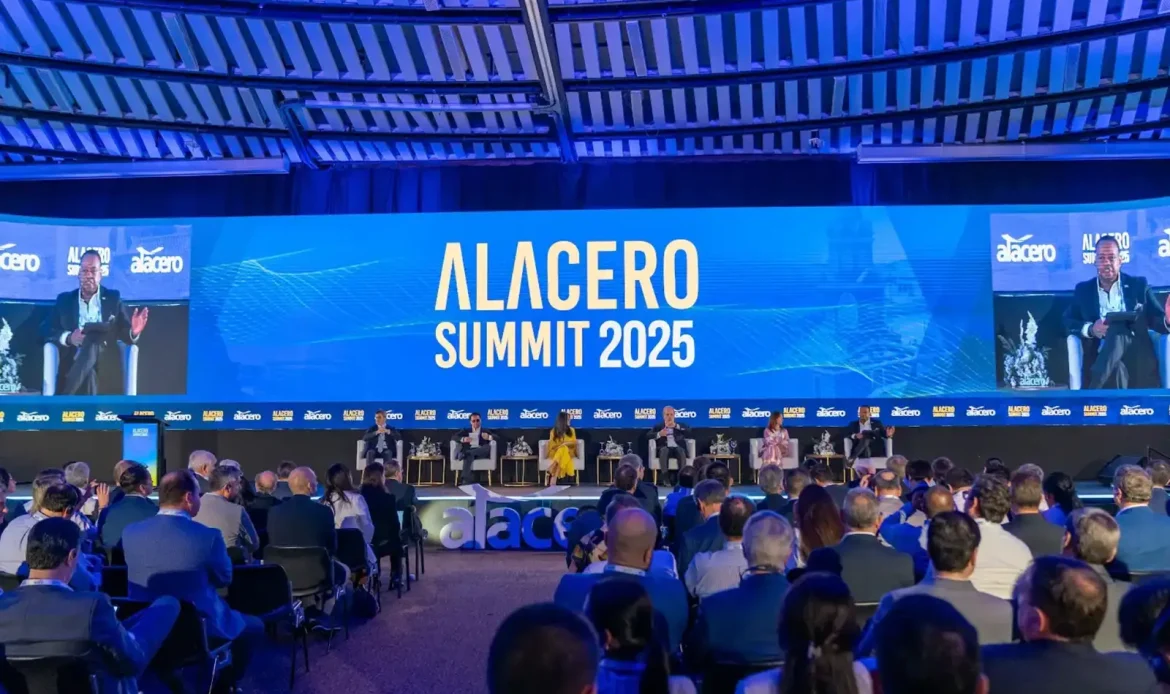
With the participation of more than 600 business leaders, government officials, international analysts, and representatives of the steel value chain, the Alacero Summit 2025 took place, concluding with a clear message for Latin America: unity, regional integration, and active defense of the industry will be essential to face the challenges posed by a global landscape increasingly shaped by China and steel overcapacity.
This year, the event highlighted that Latin America is at a turning point: a context of increasingly aggressive unfair competition, accelerated geopolitical realignment, and the urgent need to move toward cleaner and more competitive industries. In this scenario, Alacero Summit consolidated itself as the main Latin American platform for discussing industrial futures, raising alerts, and building regional consensus.
A call to defend Latin American production
Leaders agreed that the region can no longer face the impact of artificially priced imports from China in isolation, as they already affect profitability, investment, and thousands of formal, high-quality jobs. Concerns about growing market distortions were also underscored by economists and multilateral organizations. The OECD pointed out that Chinese steel production receives subsidies ten times higher than those in developed economies—an asymmetry that demands rapid and effective responses in Latin America.
The closing session featured a CEO panel with Jorge Luiz Ribeiro de Oliveira (CEO of ArcelorMittal Brazil) and Máximo Vedoya (CEO of Ternium), who agreed that the region’s steel industry is only asking to compete under fair rules with China, and that it is time for governments to implement effective measures. During the session, it was announced that Máximo Vedoya will succeed Ribeiro de Oliveira as Alacero President for the 2026–2027 term.
A geopolitical landscape that demands rethinking industrial policy
Panelists from the United States, Mexico, Brazil, Argentina, and Latin American academia agreed on the need for the region to update its industrial policy to avoid falling behind in the strategic competition between China and the United States for global manufacturing dominance.
The United States now views the region as a strategic partner, with growing investments and strong energy and industrial complementarities. At the same time, Latin America is experiencing its weakest economic growth cycle in 40 years and requires an ambitious productive agenda—beyond a commercial one.
Latin America cannot compete alone; it needs stricter rules of origin, better fiscal coordination, and integrated regional value chains.
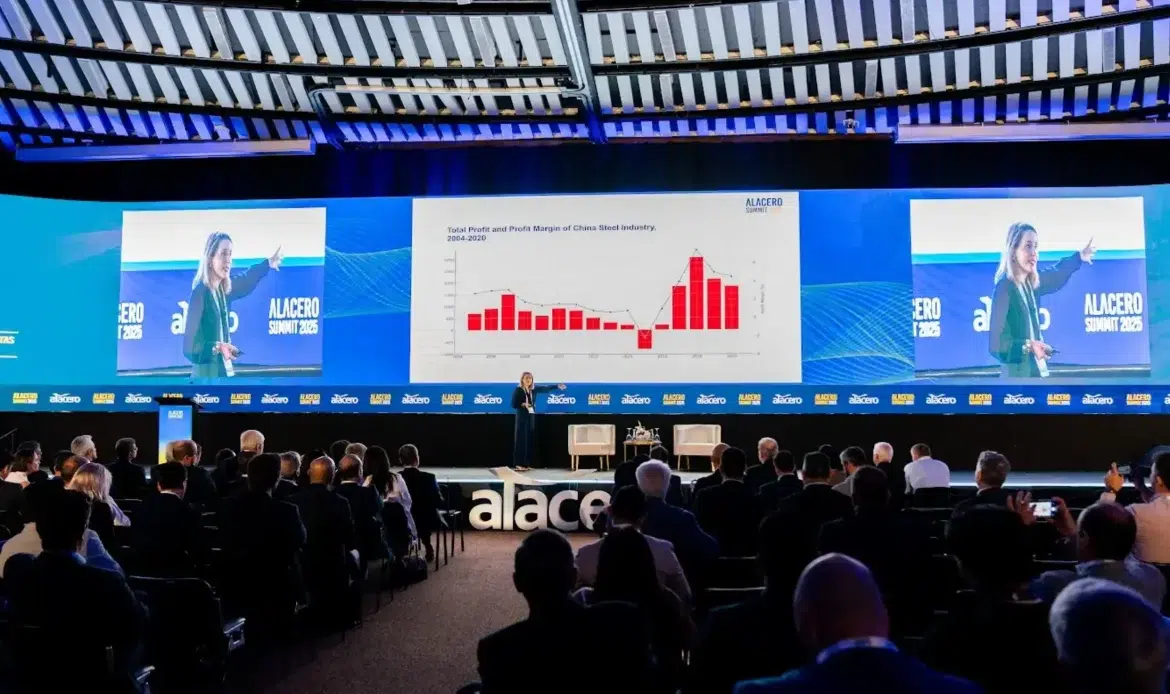
Jorge Guajardo, geopolitical advisor and former Mexican ambassador to China, analyzed how China’s industrial strategy has evolved since its economic opening in 1979 to become the world’s largest steel producer. “Between 2000 and 2020, China used more steel than the United States did in a century—yet that cycle is over. China no longer has a population to urbanize or room to grow through construction. Today, it seeks to export and capture global manufacturing, which poses a direct threat to Latin America,” Guajardo warned, emphasizing the need for coordinated industrial defense.
His analysis was complemented by John Lichtenstein, Managing Partner at World Steel Dynamics, who highlighted that the challenge for Latin America now comes not only from China’s direct steel exports, but also from “hidden steel” embedded in manufactured goods, auto parts, and final products entering the region at distorted prices. He noted that China has built a broad global strategy: exporting steel in all its forms, investing in key raw materials, financing infrastructure in developing countries, and expanding manufacturing capacity abroad.
This diagnosis was reinforced by automotive sector leaders Martín Galdeano (CEO, Ford South America) and Alexander Seitz (CEO, Volkswagen South America), who urged swift action: if Latin America does not implement effective trade defense measures, the region will end up competing not with manufacturers, but with an entire subsidized ecosystem from Asia.
An opportunity to compete globally
Beyond trade, the Summit also emphasized a strategic advantage for the region: Latin American steel emits, on average, 30% less CO₂ per ton than steel produced in China. This means that when the region imports Chinese steel, it is also importing CO₂.
Leaders highlighted ongoing multibillion-dollar projects to produce low-emission steel, modernize plants, and develop talent. Vedoya stressed: “Latin America has a modern and expanding industry: today we are investing more than 4 billion dollars only in Mexico, and we are moving toward greener steel. Let’s compete with China—yes—but under the same rules.”
Colombia sets a precedent with new tariff measures
During the Summit, Colombia announced the publication of a draft decree proposing to increase tariffs to 35% for 13 steel subheadings—a measure backed by industrial associations in response to unfair imports. This decision sends a signal to the entire region: Latin American countries are responding with strong trade defense instruments. Those with weaker defenses will become targets of trade diversion from regions that implement effective barriers.
Conclusion and call to action
The event concluded with a clear message for governments, industry, and all stakeholders in the steel value chain: Latin America must not only react; it must lead with its own industrial voice. Three priority action areas were reaffirmed:
- Greater cooperation and coordination among Latin American countries to build integrated value chains.
- Modern, intelligent public policies that encourage regional production, promote effective trade defense, and strengthen industrial competitiveness.
- Fully leveraging the region’s natural energy advantage—one of the world’s richest in renewable resources—to bolster the steel industry as a driver of reindustrialization, quality employment, and social mobility.
Alacero Summit 2025 left a clear challenge: to transform the historical opportunities of nearshoring, the energy transition, and global trade reconfiguration into a
With these agreements, Latin America’s steel industry prepares to deepen integration and continue the discussion at the next Alacero Summit, scheduled for 2026 in Mexico City.