
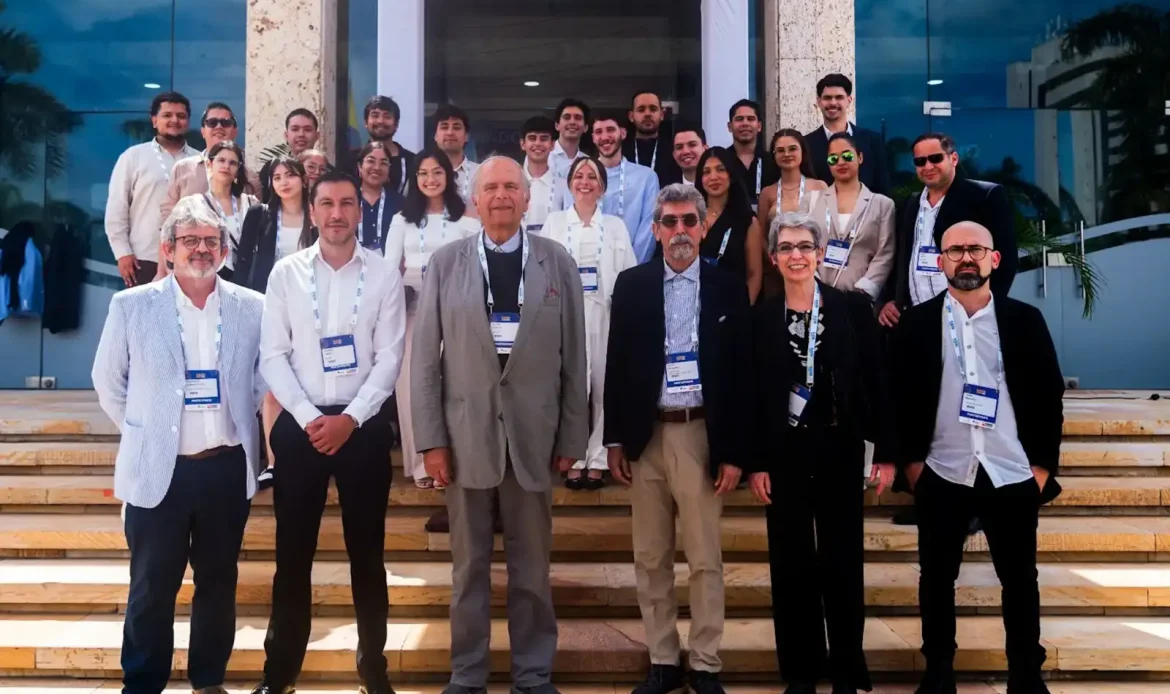
In the framework of the Alacero Summit 2025, the awards for the #DesafíoAlacero 2025 were presented. This architecture competition, aimed at university students across Latin America, seeks to encourage creativity and innovation in the use of steel in construction and promotes projects aligned with the United Nations Sustainable Development Goals (SDGs). Since its inception, more than 15,000 students from various universities in the region have participated.
In this edition, the theme was SDG No. 15: “Life on Land.” A total of 97 faculties, 320 teams, and 875 students took part. All projects were evaluated by national-level specialists, and seven teams from Argentina, Brazil, Chile, Colombia, Ecuador, Mexico, and the Dominican Republic advanced to the regional final.
The first prize went to Argentina, with the Fluviatilis project from the National University of Córdoba. Developed by Francisco Fagiuoli, Abril Luchini Aguilar and Juan Bautista Dalmasso, the proposal integrates science, community, and nature in the Laguna Blanca National Park. It uses steel to create a modular, removable, and regenerative architecture that helps restore ecosystems and promote environmental education in Patagonia.
The second prize was awarded to Colombia, with the Bioteca project from the University of Valle, created by Santiago de Jesús Torres Méndez, Ingrid Jineth Melo Zambrano, Yhino Handerson Melo, and William Alexander Criollo Muñoz. The initiative proposes transforming an old mine into an ecological and tourist landmark in the Guanacas–Puracé Páramo through a suspended structure made of steel and moss that restores the ecosystem and creates a space for learning and connection with nature.
The third prize went to Chile, with the Máquina de regeneración project from the Pontifical Catholic University of Chile. Developed by Matías Cristi Herrera, Catalina Sherie Rivillos Cortés, and Exequiel Ignacio Flores Díaz, the proposal envisions an adaptable and reversible structure that functions as a modular reforestation machine. It uses steel as a lightweight and removable structure to activate ecological regeneration processes in the Alerce Costero National Park.
Finally, the honorable mention was awarded to the Dominican Republic, with the Cápsula – Purification and Regeneration System project from the Pontifical Catholic University Madre y Maestra. The team—Luis Antonio Franco Ovalles, Guillermo Torres, Ashley Glismar Torres, and Carlos Santana—designed an innovative architectural solution aimed at recovering the waters of the Ozama River, incorporating steel as both a structural and symbolic element within a contemporary proposal committed to environmental regeneration.
The 2025 edition of the competition featured Metaluck as sponsor, supporting a new stage of academic development, innovation, and knowledge exchange related to the use of steel in the region.